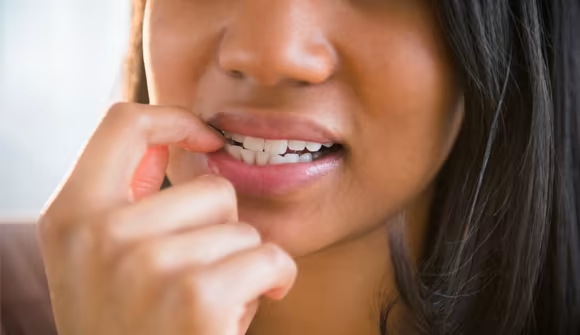
“Break Bad Habits, Build Bright Smiles – Habit Breaking Treatments at Nalamm Dental Cosmetiks”
Effective Habit Breaking Treatments in Kumbakonam Say Goodbye to Bad Oral Habits Introduction Good dental habits build beautiful smiles — but bad habits can do the opposite. Many people, especially children, develop oral habits that can affect how their teeth and jaws grow. Habits like thumb sucking, mouth breathing, tongue thrusting, or lip biting may seem harmless at first, but if left untreated, they can lead to serious dental problems over time. That’s why Habit Breaking Treatments – Nalamm Dental Cosmetiks in Kumbakonam are designed to gently and effectively help patients correct these habits early to ensure proper oral development and confident smiles. 🧠 Understanding Oral Habits Oral habits are repetitive actions involving the mouth and surrounding muscles. These can be: Behavioral: such as thumb sucking or nail biting Functional: like mouth breathing or tongue thrusting While common in children, some habits may persist into teenage or adult years, causing: Misaligned teeth Speech difficulties Gum problems Jaw growth issues Poor smile aesthetics Early intervention through professional habit breaking treatments can prevent these complications. 🪥 Common Oral Habits That Need Habit Breaking Treatments 1. Thumb Sucking A common comfort-seeking habit in children. When it continues beyond age 4 or 5, it can cause: Forward protrusion of front teeth Open bite or crossbite Changes in jaw shape 2. Tongue Thrusting When the tongue pushes against the teeth during swallowing or speaking, it can lead to: Improper teeth alignment Speech problems Difficulty with orthodontic treatments 3. Mouth Breathing Breathing through the mouth instead of the nose can cause: Dry mouth and gum issues Long, narrow face shape (in children) Improper jaw development 4. Lip Biting and Nail Biting These habits can damage tooth structure, irritate gums, and lead to uneven wear of teeth. 5. Bruxism (Teeth Grinding) Common in adults and teens, this habit can lead to: Tooth wear and cracks Jaw pain and headaches Sensitivity and sleep issues 🧑⚕️ Habit Breaking Treatments – Nalamm Dental Cosmetiks in Kumbakonam At Nalamm Dental Cosmetiks, we believe every habit can be corrected with the right approach — gentle, guided, and effective. Our habit breaking treatments are designed to: Address the root cause of the habit Use comfortable and customized habit-breaking appliances Educate patients (and parents) about oral health Prevent further dental complications ✨ Our Treatment Approach: Comprehensive Evaluation:A detailed examination to identify the type, cause, and effects of the habit. Customized Habit Breaking Appliances:Special dental appliances (like tongue cribs or habit breakers) are designed to discourage the habit gently. Behavioral Counseling:For habits like thumb sucking and nail biting, we combine appliance therapy with positive behavior techniques. Regular Follow-Up:To ensure the habit is effectively broken and dental growth remains healthy. Orthodontic Guidance:If necessary, we offer orthodontic corrections after the habit is controlled. 🦷 Benefits of Habit Breaking Treatments ✅ Prevents future orthodontic problems ✅ Supports proper jaw and teeth development ✅ Improves breathing and speech ✅ Boosts confidence and smile aesthetics ✅ Encourages lifelong healthy dental habits Addressing oral habits early not only saves time and money later but also helps create a healthier and more confident smile. 👶 Ideal Age for Habit Breaking Treatments Although these treatments can be done at any age, early intervention (4–12 years) often gives the best results. Children respond better to gentle appliance therapy and counseling. Early treatment prevents the habit from causing permanent changes to teeth and jaw structure. However, even teenagers and adults can benefit from habit-breaking treatments when guided by experienced dental professionals. 🏥 Why Choose Nalamm Dental Cosmetiks in Kumbakonam 🦷 Experienced Dental Specialists – Skilled in pediatric and adult habit correction. 🪄 Customized Treatment Plans – Tailored to each patient’s needs. 💬 Gentle & Friendly Approach – Especially comforting for children. 🧪 Advanced Appliances & Techniques – Modern, comfortable solutions. 🏆 Trusted by Families in Kumbakonam – Known for quality care. We focus not just on treating the habit but on building long-term oral wellness. 🧑🎓 Supporting Children and Parents Through the Process We understand that breaking habits — especially in children — requires patience and encouragement. That’s why our dental team: Explains the process in simple language Involves parents in every step Uses positive reinforcement rather than pressure Makes dental visits comfortable and fun for kids 📞 How to Start Habit Breaking Treatment Starting your habit breaking treatment at Nalamm Dental Cosmetiks in Kumbakonam is easy: 📅 Book an appointment for an evaluation. 🧑⚕️ Our dentist will assess the habit and recommend suitable treatment. 🦷 A comfortable, customized appliance may be designed. 📈 Follow-up visits help track progress and ensure the habit is broken effectively. 📍 Clinic: Nalamm Dental Cosmetiks, Kumbakonam📞 Call: +91-82205 25272🌐 Website: www.nalammclinics.in Conclusion Bad oral habits can silently affect a child’s or adult’s dental health — but the good news is they can be corrected effectively. Habit Breaking Treatments – Nalamm Dental Cosmetiks in Kumbakonam provide a safe, gentle, and scientifically proven way to correct habits early, ensuring healthy smiles that last a lifetime. ✨ Early care = Healthy smile = Confident future!