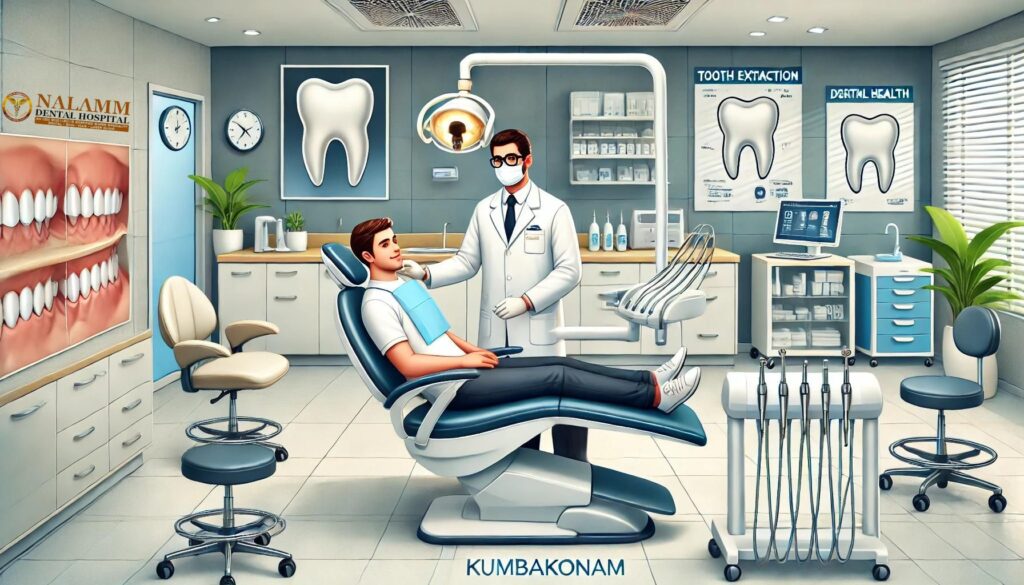
Affordable Tooth Extraction in Kumbakonam
Affordable Tooth Extraction in Kumbakonam Affordable Tooth Extraction in Kumbakonam: Ensuring Quality Dental Care Introduction Tooth extraction can be a daunting prospect, but sometimes it is the best solution for maintaining oral health. In Kumbakonam, our clinic offers affordable tooth extraction services designed to make the process as smooth and stress-free as possible. What is Tooth Extraction? Tooth extraction is the process of removing a tooth from its socket in the bone. This procedure may be necessary for several reasons, including severe tooth decay, infection, or overcrowding. It is a common dental procedure that helps maintain overall dental health and prevent further complications. Importance of Affordable Tooth Extraction Pain Relief Severe tooth pain can disrupt daily life. Extracting a problematic tooth can provide significant relief and improve your quality of life. Preventing Infection A decayed or infected tooth can affect the surrounding teeth and gums. Extraction helps prevent the spread of infection, safeguarding your overall oral health. Improving Oral Health Sometimes, removing a tooth is essential to ensure the health of the rest of your mouth. It can make space for other teeth to grow properly or prepare your mouth for orthodontic treatments. Cost-Effective Solution Dental treatments can be expensive, but affordable tooth extraction offers a cost-effective solution to significant dental issues, ensuring you don’t have to compromise on your health due to financial constraints. Why Choose Our Clinic in Kumbakonam? Expert Dental Care Our team of experienced dentists ensures that each tooth extraction is performed with utmost precision and care. We prioritize patient comfort and use the latest techniques to minimize discomfort. Affordable Prices We believe that everyone should have access to quality dental care. Our clinic offers competitive pricing for tooth extraction, making essential dental services accessible to all. Advanced Technology We use state-of-the-art equipment to perform tooth extractions. This technology allows for more efficient and less invasive procedures, ensuring quicker recovery times. Personalized Patient Care Every patient is unique, and so is their dental care. We provide personalized treatment plans and follow-up care to ensure a smooth recovery process. Our team is always available to answer any questions and provide support. Book Your Appointment Today If you are experiencing tooth pain or have been advised to consider a tooth extraction, don’t wait. Our clinic in Kumbakonam is here to provide you with the best and most affordable dental care. Schedule your appointment today and take the first step towards a healthier smile. Frequently Asked Questions Q1: Is tooth extraction painful? A: The procedure itself is painless due to local anesthesia. Some discomfort may occur afterward, but it can be managed with prescribed pain relievers. Q2: How long is the recovery period? A: Recovery typically takes a few days to a week. Following post-extraction care instructions is crucial for a smooth and quick recovery. Q3: What foods can I eat after an extraction? A: It’s advisable to stick to soft foods like soups, yogurt, and mashed potatoes. Avoid hard, chewy, or hot foods that might irritate the extraction site. Q4: Are there any risks associated with tooth extraction? A: While generally safe, tooth extractions carry some risks, such as infection or dry socket. Our dentists take every precaution to minimize these risks and will provide guidance on how to care for your mouth after the procedure. Q5: How painful is the extraction process? A: With the use of local anesthesia, the extraction process is painless. You may experience some discomfort after the procedure, which can be managed with pain medication. Q6: What is the recovery time for a tooth extraction? A: Recovery usually takes a few days to a week. Following our aftercare instructions will help ensure a smooth and quick recovery.